
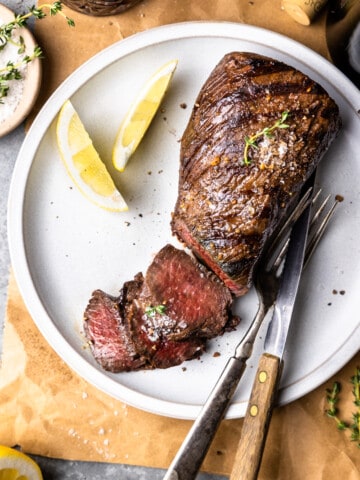
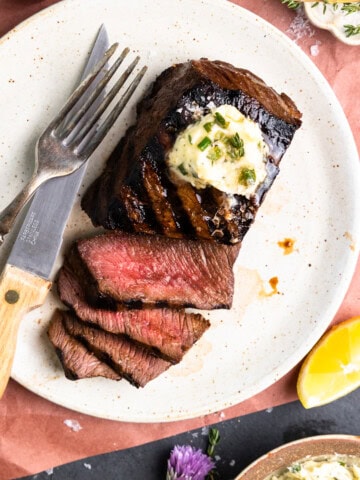
This venison tenderloin recipe starts with a simple dry brine, then it's pan-seared in a hot cast-iron skillet and finished with an easy herb butter. This prized, naturally tender cut of deer doesn't need a marinade or long list of ingredients to make it delicious.
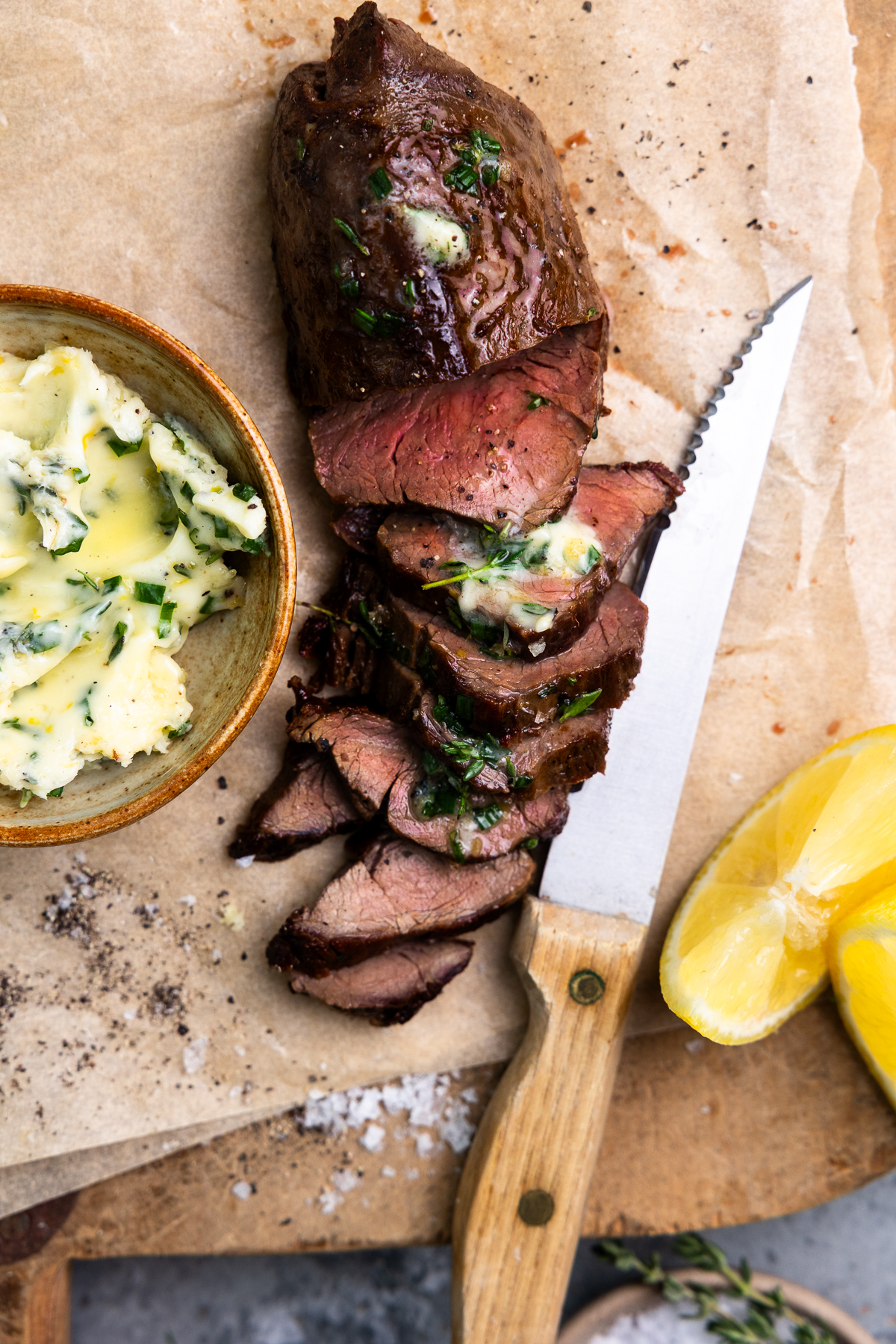
If you've ever wondered how to cook venison tenderloin without drying it out, the key is not overcomplicating it and cooking it quickly over high heat. The result is tender, juicy venison with a beautifully browned crust and a perfectly pink center.
Jump to:
- Why you'll love this recipe
- Venison tenderloin vs. backstrap
- Ingredients
- Ingredient notes
- How to cook venison tenderloin
- How to grill venison tenderloin
- Venison tenderloin internal temperature guide
- Why dry brine venison tenderloin?
- Tips for success
- Recipe FAQs
- Storing & reheating
- More venison recipes you'll love!
- Simple Pan-Seared Venison Tenderloin
Why you'll love this recipe
- Simple ingredients, no marinade needed. Venison tenderloin is incredibly tender and flavorful on its own. A simple salt dry brine is all you need, with an optional herb butter if you want something a little extra.
- Tender & juicy. Between the dry brine and a quick sear over high heat, you'll get a beautifully browned crust while keeping the center pink and juicy.
- Delicious venison flavor. Instead of covering up the natural flavor of the deer meat, this simple preparation lets the venison shine while toning down gamey flavor. If you're new to wild game and wondering what venison tastes like, tenderloin is a great cut to start with.
- Perfect recipe for pan-searing or grilling. This venison tenderloin recipe works beautifully in a hot cast iron skillet or on the grill, so you can choose whichever cooking method works for you.
Venison tenderloin vs. backstrap
Venison tenderloin and backstrap are often confused, but they're actually two different cuts of meat. The tenderloins are small, narrow cuts found inside the body cavity along the underside of the spine, between the ribs and rump. The backstraps are much larger cuts that run along the outside of the spine.
Both are incredibly tender, lean cuts that are best cooked quickly over high heat and served medium/medium-rare. Venison tenderloin is similar to beef tenderloin and is prized for its buttery-soft texture, much like filet mignon.
If you have backstrap instead, try my very popular marinated venison backstrap recipe.
Ingredients
Scroll down to the recipe card for the full ingredient list.
- Venison tenderloin. Leave whole and trim away any silver skin.
- Salt. Coarse sea salt or kosher salt.
- Oil or beef tallow. Use a high-heat cooking oil like avocado oil or beef tallow for pan-searing.
- Herb butter. Butter mixed with garlic and fresh herbs like thyme, rosemary or chives.
Ingredient notes
- Salt. Salt is used to dry brine the tenderloin, seasoning the meat throughout while helping it stay juicy and flavorful as it cooks. Because different salts vary in crystal size and density, measuring by weight will give you the best results and prevent over-seasoning or under-seasoning. I use about 0.75% of the meat's weight in salt, or about 3.4 grams of salt per pound of meat. If you don't have a kitchen scale, use a full ½ teaspoon of coarse sea salt or kosher salt per pound of tenderloin.
- Butter. You can use salted or unsalted butter. If you're sensitive to salt, I'd opt for unsalted butter since the venison is already dry-brined in salt.
How to cook venison tenderloin
Scroll down to the recipe card for the full instructions.
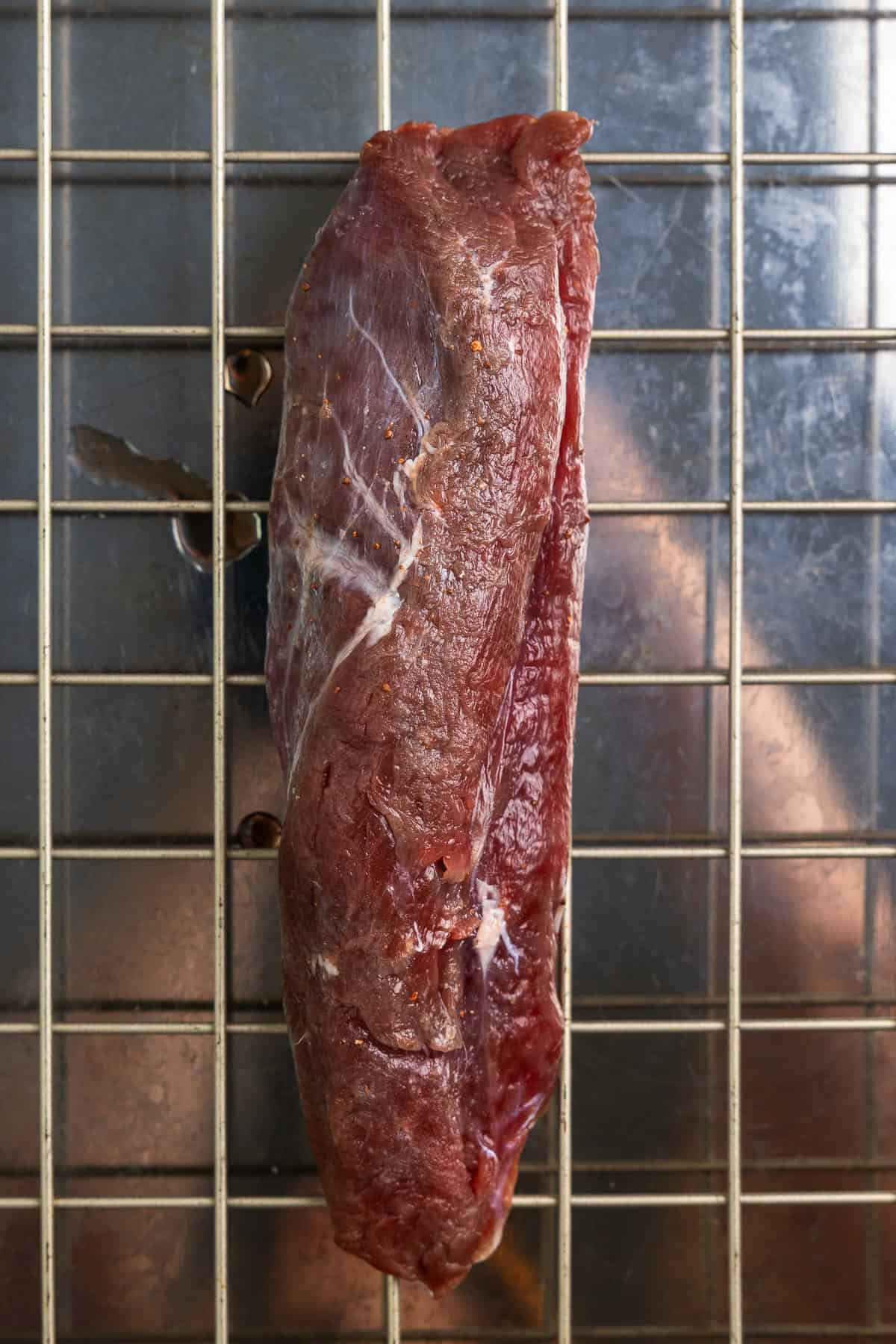
- Dry brine. Season the venison tenderloin with salt and refrigerate uncovered for at least 2-3 hours or up to 12 hours.
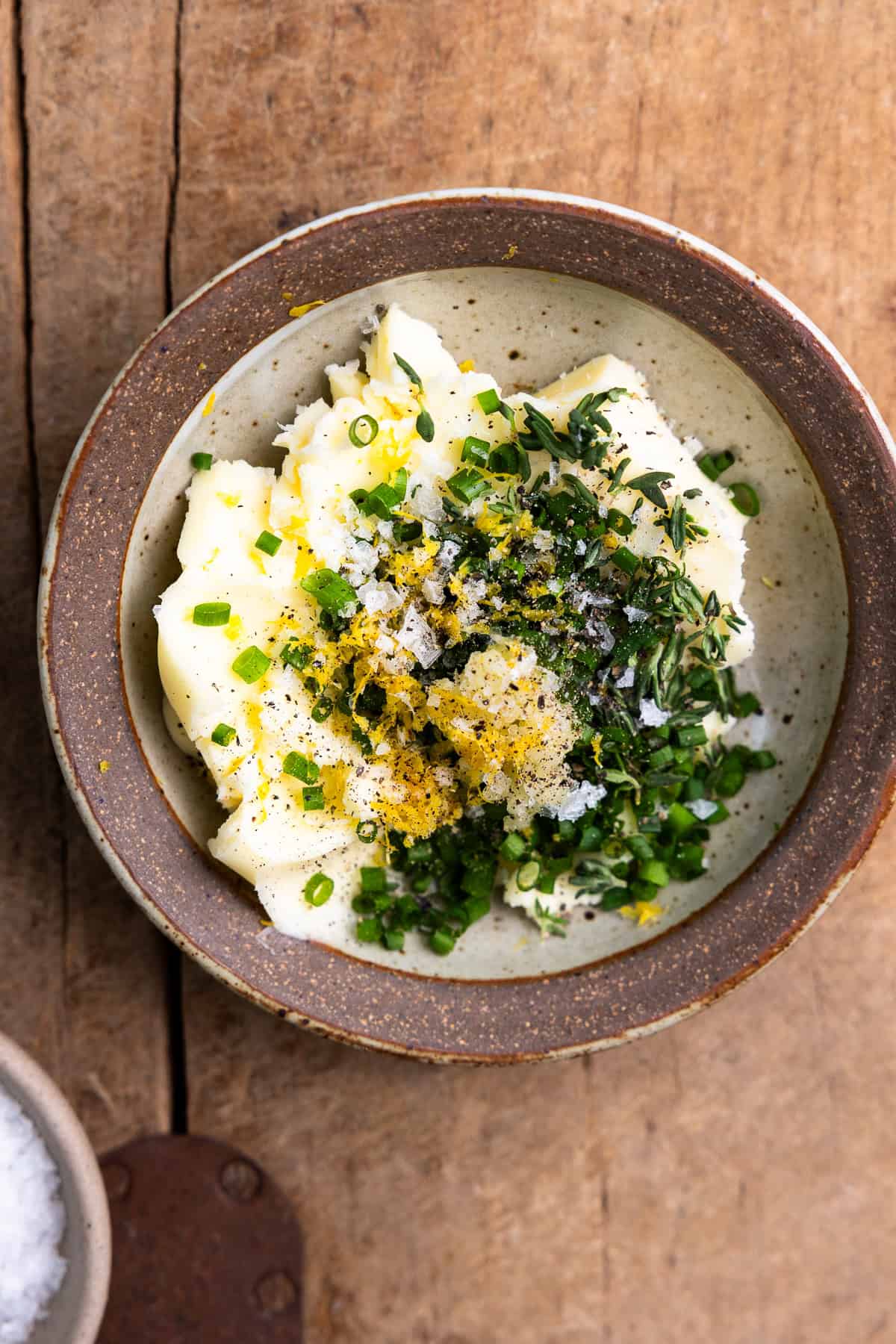
- Make the herb butter. Mix softened unsalted butter with minced garlic, fresh herbs and lemon zest.
- Pan sear. Heat a cast iron skillet over medium-high heat until hot. Add a little oil, then sear the tenderloin until evenly browned all over.
- Butter baste. During the last few minutes of cooking, reduce the heat and add the garlic herb butter. Once melted, spoon the butter over the tenderloin as it finishes cooking.
- Check the temperature. For medium-rare, remove the tenderloin from the skillet at 125-130°F. Use an instant-read thermometer to avoid overcooking.
- Rest and slice. Let the tenderloin rest for 5-10 minutes before slicing against the grain and serving with more herb butter.
How to grill venison tenderloin
Venison tenderloin is also delicious cooked on the grill. Preheat the grill to medium-high heat, and lightly grease the grill grates with cooking oil to prevent sticking.
Grill the tenderloin over direct heat for 2-3 minutes per side, turning as needed to evenly brow all sides. During the last couple minutes, brush the tenderloin with garlic herb butter. If the outside is browning too quickly before the center is done, move the tenderloin to indirect heat to finish cooking.
For medium-rare, remove the tenderloin from the grill when the internal temperature reaches 125-130°F. Let it rest for 5-10 minutes before slicing. The temperature will continue to rise about 5°F as it rests.
Venison tenderloin internal temperature guide
I highly recommend using an instant-read meat thermometer when cooking venison tenderloin to ensure you don't overcook or undercook it. Here are the recommended temperatures for each degree of doneness. I also wrote an entire post on venison internal temperatures if you need more guidance.
- Rare: 125°F
- Medium-rare: 130-135°F
- Medium: 135-140°F
- Medium-well: 140-150°F
- Well: 150-160°F+
I like to cook venison steak to around 130-135°F. It's still pink and juicy in the center, but not raw, and nicely seared around the outside.
Pro tip! Always account for the fact that the meat will continue to cook once it's removed from the heat source; this is called carryover cooking. The residual heat left in the meat will continue to cook the meat for about 5 minutes, and the temperature will continue to rise 5-10 degrees. So, for example, if you want the venison steak cooked to 135°F for medium, remove the meat from the heat source at 130°F, then let it rest for 5-10 minutes until it reaches 135°F.
Why dry brine venison tenderloin?
Dry brining simply means seasoning the venison with salt ahead of time and letting it rest before cooking. It seasons the meat throughout while helping it stay juicy. And unlike a marinade, a dry brine doesn't add extra moisture to the surface of the meat, making it easier to get a nicely seared, beautifully browned crust.
Since venison tenderloin is naturally very tender, it doesn't need a marinade to tenderize it.
For the best results, I recommend dry brining for at least 2-3 hours or up to 12 hours. At first, the salt draws moisture to the surface of the meat. Given enough time, that moisture is reabsorbed, carrying the salt with it to season the meat more deeply and help it stay juicy as it cooks.
Tips for success
- Plan ahead and dry brine. Dry brine the tenderloin for at least 2-3 hours or up to 12 hours for better flavor.
- Short on time? If you don't have at least an hour to dry brine the tenderloin, season it with salt immediately before cooking instead. Salting it about 20-30 minutes ahead can actually draw moisture to the surface without giving it enough time to reabsorb, making it harder to get a good sear.
- Always use a meat thermometer. Venison is best when cooked to medium-rare or medium. Using a meat thermometer will ensure you don't undercook or overcook the tenderloin.
- Let the steaks rest. Rest for 5 to 10 minutes before slicing. This gives the juices time to redistribute throughout the meat, resulting in a tender, juicy steak instead of losing those flavorful juices on the cutting board.
- Account for carryover cooking. While the steaks rest, the residual heat left in the meat after you remove it from the skillet or grill will continue to raise the internal temperature by about 5-10°F. So, if you want your venison steak cooked to 135°F for medium, remove it from the heat at 130°F.
- Slice against the grain. Cut the tenderloin into slices against the grain for the most tender bite.
Recipe FAQs
Venison tenderloin is very lean and because of that it's is best cooked quickly over high heat to keep it tender and juicy. My favorite method is pan-searing it in a hot cast iron skillet to get a beautifully browned crust while keeping the inside slightly pink.
No, venison tenderloin and backstrap are two different cuts of meat. The tenderloins are small, incredibly tender muscles located inside the body cavity along the spine, while the much larger backstraps run along the outside of the spine. Both are naturally tender cuts that are best cooked quickly and not overcooked.
No, venison tenderloin is naturally very tender, so it doesn't need a marinade to tenderize it. For this recipe, I prefer to simply dry brine the tenderloin with salt. This seasons the meat throughout, helps it stay juicy, dries the surface for a better sear, and lets the natural flavor of venison shine.
If you're cooking a different cut of venison steak, try my marinated venison steak recipe instead. The simple mariande adds lots of flavor while helping to keep the meat tender and juicy.
The most important thing is to not overcook it. Venison is very lean, so it can quickly become dry when cooked too long. For the most juicy tenderloin, cook it to medium-rare or medium and use an instant-read thermometer to check the internal temperature. Remove it from the heat about 5°F before your desired final temperature to account for carryover cooking, then let it rest for 5-10 minutes before slicing.
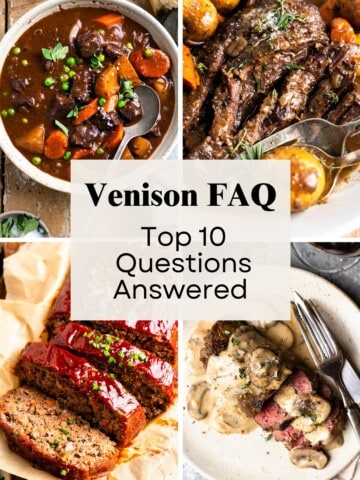
Have more questions about cooking deer meat? My Venison FAQs cover everything from preparing and cooking venison to storing it and getting the best flavor.
Storing & reheating
Store leftover venison in an airtight container in the refrigerator for up to 4 days.
To reheat, warm gently in a skillet over low-medium heat with a little butter or oil. You can reheat the whole tenderloin or cut it into slices first.

Did you try this recipe?
I'd love to hear from you! Leave a ⭐️⭐️⭐️⭐️⭐️ rating and comment below. I appreciate your helpful feedback! Follow me on Instagram, TikTok, Facebook and Pinterest for more delicious recipes!
Thanks so much! - Rachel
Simple Pan-Seared Venison Tenderloin
Equipment
Ingredients
Venison Tenderloin
- 1 pound venison tenderloin
- ½ teaspoon coarse sea salt or kosher salt* (3.5 grams)
- ¼ teaspoon freshly ground black pepper
- 1 tablespoon beef tallow (or other cooking oil)
- lemon wedges for serving, optional
Garlic Herb Butter
- ¼ cup unsalted butter softened
- 1 garlic clove minced
- 1 teaspoon finely chopped fresh thyme
- ½ teaspoon finely chopped chives (substitute rosemary, parsley, or your favorite herb)
- ½ teaspoon lemon zest (about ¼ lemon)
Instructions
- Dry brine the venison. Season the tenderloin all over with the salt, place on a plate or, ideally, a wire rack over a sheet pan and refrigerate uncovered for at least 2-3 hours or up to 12 hours.
- Make the garlic herb butter. Mix all of the ingredients together until combined. Set aside.
- Prepare the venison. Remove the tenderloin from the refrigerator about 20-30 minutes before cooking. Pat the surface dry if needed and season with black pepper. Do not add additional salt.
- Sear the tenderloin. Heat a cast iron skillet over medium-high heat. Add the tallow and swirl to coat the bottom of the skillet. Add the tenderloin and sear for about 2-3 minutes, or until deeply browned. Turn and sear the opposite side for another 2-3 minutes. Continue turning as needed to brown the tenderloin on all sides. For medium-rare, most tenderloins will take about 6-8 minutes total, depending on thickness.
- Baste with garlic herb butter. During the last few minutes of cooking, reduce the heat to medium-low and add a big scoop of garlic herb butter to the skillet. Once melted, tilt the skillet and continuously spoon the butter over the tenderloin until it reaches your desired temperature (125-130°F for medium-rare).
- Rest. Transfer the tenderloin to a cutting board and spoon more garlic herb butter over the top. Let rest for 5-10 minutes. The internal temperature will continue to rise about 5°F as it rests.
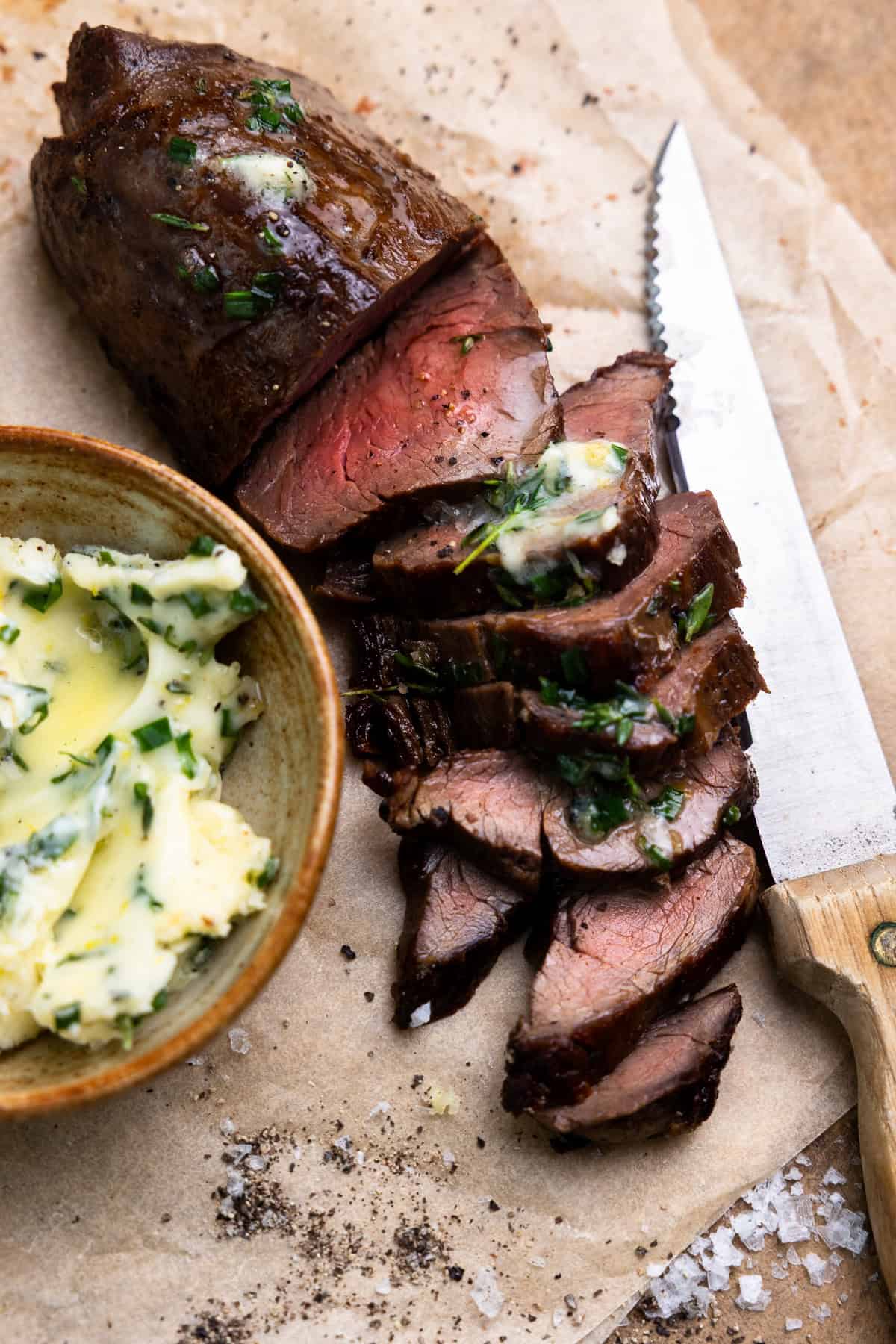
- Slice and enjoy. Slice the tenderloin against the grain, and serve with fresh lemon wedges and more garlic herb butter, if desired.
Notes
- *Salt. For the most accurate dry brine, use salt equal to approximately 0.75% of the weight of the meat. For 1 pound (454 grams) of venison, that's about 3.4 grams of salt (454 grams x 0.0075) or ½ teaspoon of sea salt or kosher salt. No worries if you don't have a kitchen scale, use your best judgment with a measuring spoon.
- Short on time? If you don't have at least an hour to dry brine the tenderloin, season it with salt immediately before cooking instead. Salting it about 20-30 minutes ahead can actually draw moisture to the surface without giving it enough time to reabsorb, making it harder to get a good sear.
- Cooking time: Venison tenderloins vary in size and thickness, so use the cooking times as a guide and rely on internal temperature to determine doneness.
-
Internal temperature: I also wrote an entire post on venison internal temperatures if you need more guidance.
- Rare: 125°F
- Medium-rare: 130-135°F
- Medium: 135-140°F
- Medium-well: 140-150°F
- Well: 150-160°F+
Nutrition
Nutritional information is automatically calculated by a third party software and is only an estimate, not a guarantee. This information is provided as a courtesy, and you are solely responsible for all decisions related to your health.


Leave a Reply