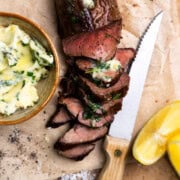
Simple Pan-Seared Venison Tenderloin
This venison tenderloin recipe starts with a simple dry brine, then it's pan-seared in a hot cast-iron skillet and finished with an easy herb butter. This prized, naturally tender cut of deer doesn't need a marinade or long list of ingredients to make it delicious.
Servings: 4 servings
Calories: 271kcal
Equipment
Ingredients
Venison Tenderloin
- 1 pound venison tenderloin
- ½ teaspoon coarse sea salt or kosher salt* (3.5 grams)
- ¼ teaspoon freshly ground black pepper
- 1 tablespoon beef tallow (or other cooking oil)
- lemon wedges for serving, optional
Garlic Herb Butter
- ¼ cup unsalted butter softened
- 1 garlic clove minced
- 1 teaspoon finely chopped fresh thyme
- ½ teaspoon finely chopped chives (substitute rosemary, parsley, or your favorite herb)
- ½ teaspoon lemon zest (about ¼ lemon)
Instructions
- Dry brine the venison. Season the tenderloin all over with the salt, place on a plate or, ideally, a wire rack over a sheet pan and refrigerate uncovered for at least 2-3 hours or up to 12 hours.
- Make the garlic herb butter. Mix all of the ingredients together until combined. Set aside.
- Prepare the venison. Remove the tenderloin from the refrigerator about 20-30 minutes before cooking. Pat the surface dry if needed and season with black pepper. Do not add additional salt.
- Sear the tenderloin. Heat a cast iron skillet over medium-high heat. Add the tallow and swirl to coat the bottom of the skillet. Add the tenderloin and sear for about 2-3 minutes, or until deeply browned. Turn and sear the opposite side for another 2-3 minutes. Continue turning as needed to brown the tenderloin on all sides. For medium-rare, most tenderloins will take about 6-8 minutes total, depending on thickness.
- Baste with garlic herb butter. During the last few minutes of cooking, reduce the heat to medium-low and add a big scoop of garlic herb butter to the skillet. Once melted, tilt the skillet and continuously spoon the butter over the tenderloin until it reaches your desired temperature (125-130°F for medium-rare).
- Rest. Transfer the tenderloin to a cutting board and spoon more garlic herb butter over the top. Let rest for 5-10 minutes. The internal temperature will continue to rise about 5°F as it rests.
- Slice and enjoy. Slice the tenderloin against the grain, and serve with fresh lemon wedges and more garlic herb butter, if desired.
Notes
- *Salt. For the most accurate dry brine, use salt equal to approximately 0.75% of the weight of the meat. For 1 pound (454 grams) of venison, that's about 3.4 grams of salt (454 grams x 0.0075) or ½ teaspoon of sea salt or kosher salt. No worries if you don't have a kitchen scale, use your best judgment with a measuring spoon.
- Short on time? If you don't have at least an hour to dry brine the tenderloin, season it with salt immediately before cooking instead. Salting it about 20-30 minutes ahead can actually draw moisture to the surface without giving it enough time to reabsorb, making it harder to get a good sear.
- Cooking time: Venison tenderloins vary in size and thickness, so use the cooking times as a guide and rely on internal temperature to determine doneness.
-
Internal temperature: I also wrote an entire post on venison internal temperatures if you need more guidance.
- Rare: 125°F
- Medium-rare: 130-135°F
- Medium: 135-140°F
- Medium-well: 140-150°F
- Well: 150-160°F+
Nutrition
Serving: 1serving | Calories: 271kcal | Carbohydrates: 0.5g | Protein: 26g | Fat: 18g | Saturated Fat: 9g | Polyunsaturated Fat: 1g | Monounsaturated Fat: 6g | Trans Fat: 0.5g | Cholesterol: 127mg | Sodium: 350mg | Potassium: 372mg | Fiber: 0.1g | Sugar: 0.01g | Vitamin A: 379IU | Vitamin C: 1mg | Calcium: 13mg | Iron: 4mg
