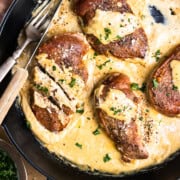
Pan-Seared Pheasant with Creamy Dijon Mustard Sauce
This pan-seared pheasant with dijon mustard cream sauce is one of my go-to pheasant recipes because it’s simple, made in one pan, and finished in a rich sauce that keeps the meat tender and flavorful. Serve over mashed potatoes for an easy, comforting, and approachable wild pheasant dinner everyone will love.
Servings: 4 servings
Calories: 522kcal
Equipment
Ingredients
- 4 pheasant breasts skinless
- Salt to taste
- Pepper to taste
- ¼ cup all purpose flour for dredging
- 2 tablespoons butter
- 1 tablespoon olive oil
Creamy Dijon Mustard Sauce
- 2 garlic cloves minced
- ½ cup dry white wine
- ½ cup chicken broth
- 1 cup heavy cream
- 2 tablespoons dijon mustard or to taste
- ½ teaspoon salt
- ¼ teaspoon pepper
- Fresh parsley or fresh thyme (optional garnish)
Instructions
- Remove the pheasant from the fridge about 30 minutes before cooking and let rest at room temperature. This helps to ensure more even cooking.
- Season both sides of the pheasant breasts with salt and pepper. Dredge each piece of pheasant in flour and shake off the excess.
- Melt the butter and olive oil in a large skillet with tall sides over medium-high heat. Add to the skillet and cook for about 3-4 minutes until browned. Flip and cook for another 3-4 minutes until browned and cooked to an internal temperature of 155°F. Remove the pheasant to a clean plate while you make the creamy dijon sauce.
- Place the skillet back on the stove over medium heat. Add the garlic and cook for 30-60 seconds, until fragrant (there should be butter and oil left in the skillet, but if not, add another tablespoon of butter).
- Slowly pour in the white wine followed by the chicken broth, scraping the browned bits from the bottom of the skillet. Let simmer until reduced by half, about 5 minutes. Whisk in the heavy cream, dijon mustard, salt and pepper.
- Add the pheasant back to the skillet with the sauce. Let simmer for 2–3 minutes, until slightly thickened and coats the back of a spoon. If the sauce is too thick, you can thin it out with more chicken broth. Garnish with fresh parsley or thyme, if desired.
- Serve over mashed potatoes with crusty bread to soak up the extra sauce.
Notes
Ingredient Notes:
- Pheasant breasts. This recipe was developed for pheasant breasts. I don't recommend using thighs here, as those are better suited for braising (slow cooking in liquid).
- Butter & olive oil. Butter adds rich flavor, while olive oil has a higher smoke point, giving you the best of both worlds. You can try using just one or other, but this recipe was tested using both.
- White wine. A dry white wine like Sauvignon Blanc or Pinot Grigio works well. You will have leftover wine, so choose something you enjoy drinking.
- No white wine? You can substitute with additional chicken broth in place of the wine. The sauce will still be creamy and flavorful, though slightly less complex.
- Heavy cream. While I don't recommend substituting the heavy cream, you can try half-and-half in a pinch. Keep in mind the sauce will be slightly thinner and you may need to simmer the sauce longer.
- Dijon mustard. A whole-grain mustard can be used in place of dijon, though the texture and flavor will be slightly different. I don't recommend using yellow mustard, as it will overpower the sauce.
- Adjust the mustard flavor. The recipe calls for 2 tablespoons of dijon mustard, which adds a mild mustard flavor, in my opinion. If you're hesitant, start with just 1 tablespoon and add more to taste. For a stronger mustard kick, add an extra tablespoon.
Nutrition
Serving: 1serving | Calories: 522kcal | Carbohydrates: 10g | Protein: 25g | Fat: 40g | Saturated Fat: 20g | Polyunsaturated Fat: 3g | Monounsaturated Fat: 14g | Trans Fat: 0.2g | Cholesterol: 152mg | Sodium: 584mg | Potassium: 349mg | Fiber: 1g | Sugar: 2g | Vitamin A: 1229IU | Vitamin C: 6mg | Calcium: 66mg | Iron: 2mg
